
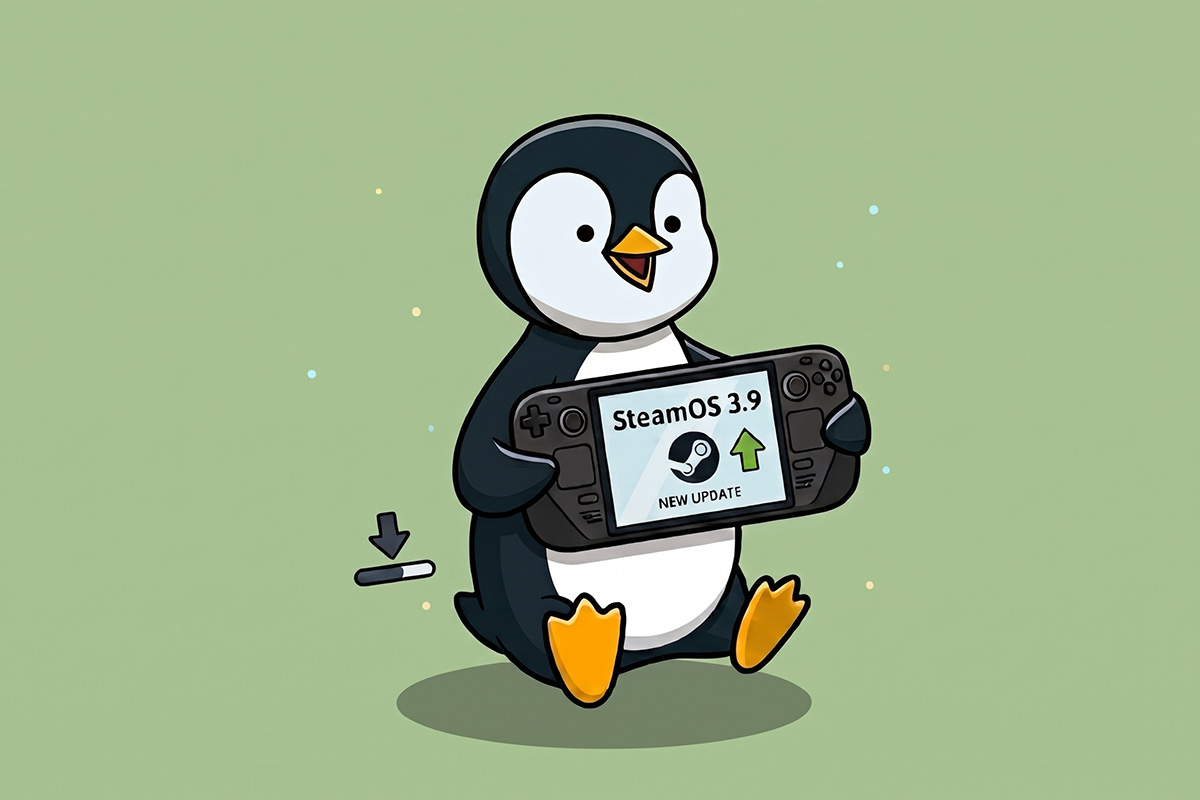
Valve has released SteamOS 3.9.3 Beta, introducing several bug fixes, improved hardware compatibility, and security updates. The latest release focuses on resolving gaming performance issues and improving the reliability of Steam Machine and other devices running SteamOS. The broader SteamOS 3.9 update also includes a newer Linux kernel and an upgraded KDE Plasma desktop environment.
SteamOS is a Linux-based operating system developed by Valve, primarily designed for PC gaming. It powers the Steam Deck handheld gaming device and is also intended for other gaming hardware, including Steam Machine. SteamOS provides access to the Steam game library and uses the Proton compatibility layer to run many Windows games on Linux. Alongside its gaming-focused interface, the operating system includes a KDE Plasma desktop environment, allowing compatible devices to function as conventional computers.
SteamOS 3.9.3 is currently available through the Beta and Preview update channels, meaning the new features and improvements are still being tested. Users can enable the update by navigating to Settings → System → System Update Channel and selecting the appropriate channel.
One of the main fixes in the latest release addresses performance problems in STAR WARS: Galactic Racer on Steam Machine after resuming from sleep mode.
Valve has also resolved an issue that could cause GPU errors in The Crew Motorfest, along with audio problems when connecting certain monitors in multi-monitor configurations.
Additionally, the update improves support for the Steam Frame wireless adapter and includes further security and stability enhancements.
SteamOS 3.9 Introduces KDE Plasma 6.7 and Linux Kernel 7.2
Among the most significant changes in the SteamOS 3.9 development branch are an updated Arch Linux base and an upgrade of the KDE Plasma desktop environment from version 6.4.3 to 6.7.3.
KDE Plasma 6.7 introduces several desktop improvements, including enhancements to virtual desktop management, application handling, and appearance customization.
The operating system’s Linux kernel has also been updated to version 7.2, bringing improvements to hardware compatibility and overall system functionality.
Valve has updated the bootloader as well, improving compatibility with certain motherboards.
Fixes for ELDEN RING, DARK SOULS III and Forza Horizon 6
SteamOS 3.9 includes fixes for several issues affecting popular PC games.
One of these addresses a compatibility problem that prevented games such as ELDEN RING and DARK SOULS III from launching on systems equipped with newer Intel Panther Lake processors.
Valve has also fixed a system crash that occurred when launching Forza Horizon 6 on the Lenovo Legion Go 2. The update introduces preliminary support for brightness controls on the same handheld device.
Several improvements have been made to variable refresh rate (VRR) functionality and frame rate limiting.
Previously, certain external displays could cause games to run at lower frame rates than the configured limit. Valve has addressed this issue and fixed a problem where the Disable Frame Limiter option did not work correctly when VRR was enabled.
Another fix prevents frame rate limits from being incorrectly applied to virtual reality games streamed from Steam Machine to Steam Frame.
Improved Wi-Fi Connectivity and Sleep Mode Reliability
SteamOS 3.9 also addresses several connectivity and power management issues.
Valve has fixed a bug that could prevent devices from connecting to hidden Wi-Fi networks on the first attempt.
For new installations, SteamOS now uses wpa_supplicant as its default Wi-Fi backend, improving compatibility with different wireless networks.
The implementation has also been enhanced to support faster Wi-Fi reconnection after waking from sleep mode.
Existing installations will continue using the previous iwd backend unless users manually switch to wpa_supplicant through Developer Settings.
The update also resolves suspend and resume issues on systems equipped with dedicated graphics cards based on AMD’s RDNA1 and RDNA2 architectures.
On certain ASUS devices, Valve has worked around a firmware issue that caused excessive fan speeds after waking from sleep.
Additional fixes address display corruption during startup on newer Intel platforms.
Preliminary Hibernation Support Added
One of the more notable technical additions in SteamOS 3.9 is preliminary support for hibernation.
Unlike conventional sleep mode, hibernation saves the system’s current state to storage, allowing users to restore their previous session later without keeping the device powered in the same way as during sleep.
However, the feature is not yet accessible through the SteamOS Game Mode interface.
Valve has also improved Linux kernel hibernation functionality, including support for interrupting hibernation requests and resolving several driver-related issues.
For developers, SteamOS 3.9.3 restores Android binder IPC support, which enables communication between components commonly used in Android-based software environments.
Other technical improvements include better support for running SteamOS as a virtual machine with accelerated graphics using virtio-gpu and Venus.
The included RenderDoc version has also been updated, while various system scripts and packages have been renamed from the steamos- prefix to holo-, with compatibility aliases retained where appropriate.
Additional Steam Machine and Desktop Mode Improvements
The SteamOS 3.9 update includes several fixes specifically targeting Steam Machine functionality.
One issue prevented Steam Remote Play from working when a Steam Machine was started without an external display connected. This has now been resolved.
Valve has also fixed a problem that could cause input controls to stop responding if a launcher window was accidentally dragged in Game Mode.
In Desktop Mode, users can now explicitly enable the lock screen through system settings, although it remains disabled by default.
The update also fixes remote desktop login issues involving system users when connecting through RDP.
SteamOS 3.9.3 Remains in Beta Testing
SteamOS 3.9.3 is not yet a stable release, and Valve continues to test its new features, compatibility improvements, and bug fixes.
Users interested in trying the update can switch to the Beta or Preview channel through the operating system’s settings.
Those who prioritize stability may prefer to remain on the stable SteamOS 3.8 release until the new version has completed testing.
The SteamOS 3.9 release notes include all changes introduced since SteamOS 3.8, while version 3.9.3 adds the latest fixes for gaming performance, audio, wireless hardware support, and system reliability.
Leave a Reply